.png)
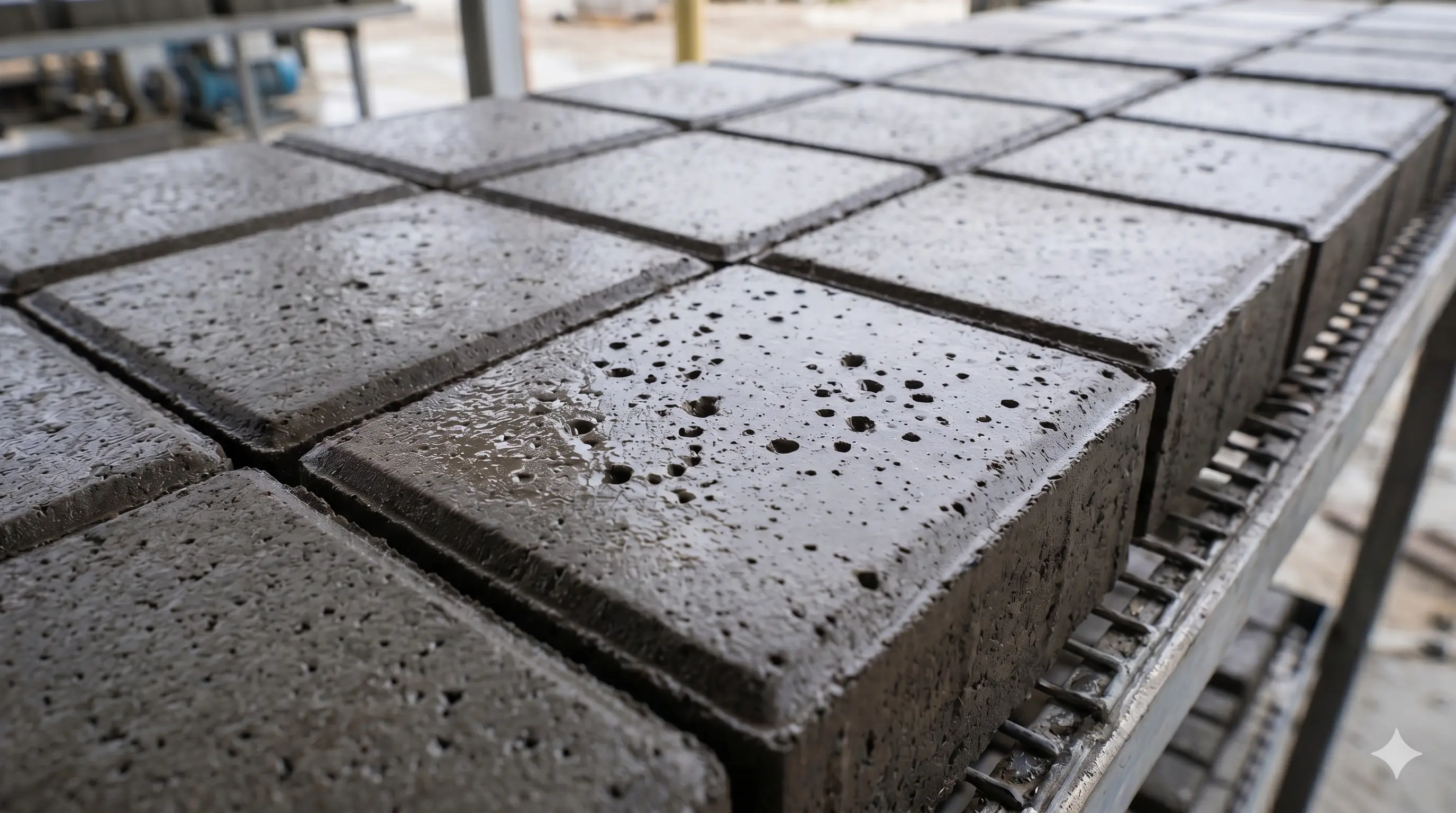
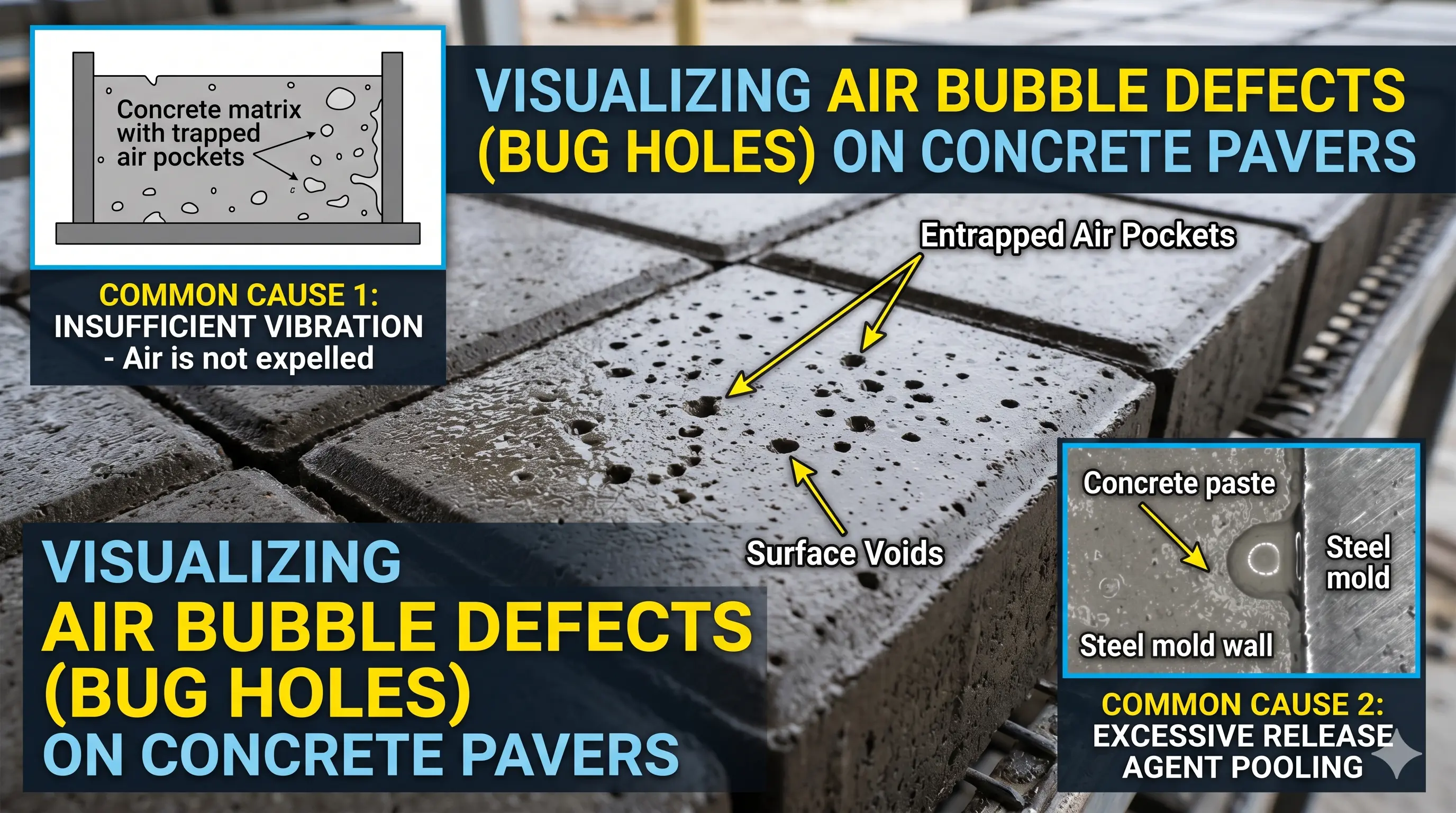
If you are in the paver block manufacturing business, you know that a smooth, flawless mirror-like finish is everything. Customers expect perfect aesthetics and structural durability for their driveways and walkways. So, when you demould a fresh batch of concrete pavers only to find the surface riddled with tiny air bubbles (often called pinholes, blowholes, or bug holes), it can be incredibly frustrating.
These surface imperfections don't just ruin the visual appeal—they act as micro-craters that trap dirt, absorb excess rainwater, freeze in cold climates, and eventually compromise the compressive strength and lifespan of the block.
So, why are your paver blocks getting air bubbles on the surface, and more importantly, how do you eliminate them permanently? For effective troubleshooting air bubbles in paver blocks, let's break down the science behind trapped air, rheology of concrete, and the exact mechanical steps you can take to achieve a glass-like finish.
The Science of Entrapped Air in Concrete
At its core, surface bubbling is a trapped air problem. When wet concrete is aggressively mixed in a pan mixer or planetary mixer and then poured into a mould, countless microscopic air pockets (entrapped air) are mechanically introduced into the paste. Unlike entrained air (which is microscopic and intentional for freeze-thaw resistance), entrapped air consists of larger, irregular voids.
During the vibration process, this entrapped air naturally wants to rise and escape due to buoyancy. However, if the air gets trapped between the thick wet concrete mix and the rubber mould wall, it cures in place. When you finally pop the paver out of the mould, you are left with unsightly craters.